

 If you have ever lived, visited or thought about visiting a tropical island destination then you have probably heard the term “Island time.” But have you actually stopped to embrace and enjoy what island time really is and what it represents?
For the past 8 years I have been living on one island or another and no island really represents island time better than Fiji. Fijians believe that you never know what tomorrow will bring so why rush today. To me this belief is spot on. Too many people rush thought life without stopping to enjoy what it really means to live. How life should be viewed and enjoyed and not just a race to see who can finish first.
Thousands of westerners travel hours and thousands of miles away every year to visit an island some place around the world, to relax and recharge their batteries on holiday. Few though are able to truly capture the “Fiji time” spirit. Many pack as many activities into a trip as possible to not miss a minute of excitement. Rushing from here to there to see all they can spot in one week, rather than stop and watch life happen around them.
Scuba divers are part of the many people who fall into this trap of trying to spot and check off as many adventures as possible rather than slow down and really see what's happening underwater. Turtle, check. Shark, check. Nemo, check. Another turtle, already found one, move on. Last week Vicky wrote about slowing the dive down and focusing on the small things, the nudibranchs, shrimps etc. This week my goal is to slow things down even more, to stop and smell the roses... underwater.

This past week I had the pleasure of teaching Jason his Open Water course. During his course Jason found turtles, sharks, anemone fish, lion fish, nudibranchs, countless other reef fish and found some really cool stuff. But the highlight of the course for him and me was his final two dives where we slowed everything waaaaaaaayyy dooowwwwwwwnnnnnn. In fact we slowed things so far down on the last dive we spent 89 minutes underwater and only covered half of the dive site. Yes, a dive site that normally takes 45 minutes to swim though we spent 89 minutes and only saw half of it. That's how slow we were going. Why did it takes us this l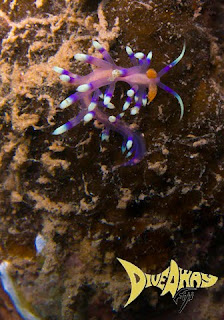 ong? Because we stopped at every coral bommy, looked in every nook and cranny for anything and everything. We stopped and enjoyed what was happening around us, watching a pair of jaw fish dig out their burrow for ten minutes. One fish on lookout guarding the other digging, then how they would switch roles. We watched as they chased off other fish trying to come in for a look, how one fish excavated a rock bigger than him (or her). Then a few feet later we observed the mutualistic symbiotic relationship between two species, a goby and a blind shrimp. The goby provides protection of a lookout while the shrimp digs the hole. Both animals now have a home, the goby does less work and the shrimp has a pair of eyes to watch for predators.
 ong? Because we stopped at every coral bommy, looked in every nook and cranny for anything and everything. We stopped and enjoyed what was happening around us, watching a pair of jaw fish dig out their burrow for ten minutes. One fish on lookout guarding the other digging, then how they would switch roles. We watched as they chased off other fish trying to come in for a look, how one fish excavated a rock bigger than him (or her). Then a few feet later we observed the mutualistic symbiotic relationship between two species, a goby and a blind shrimp. The goby provides protection of a lookout while the shrimp digs the hole. Both animals now have a home, the goby does less work and the shrimp has a pair of eyes to watch for predators.
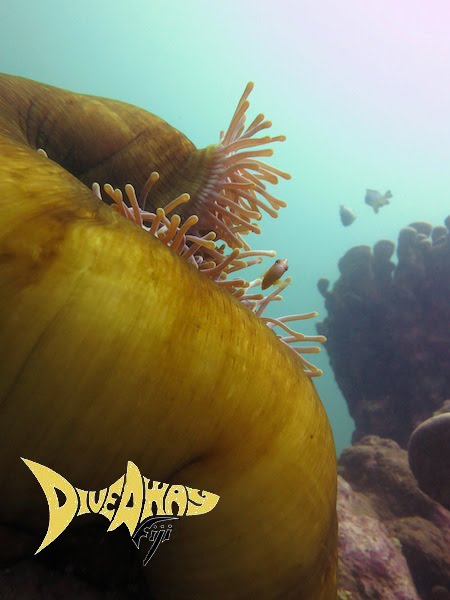
These types of relationsh ips happen all around us underwater, but we have to stop and slow down to spot them, slow down to Fiji dive time. Spending 89 minutes underwater on a dive definitely helps. The more time we spend underwater the more likely we are to see something interesting or new. Actually this is one of the reasons Vicky and I decided to come to Fiji for diving. We had both previously worked at places that restricted divers dive times and we wanted to get back to what the scuba lifestyle is about, enjoying the underwater world for it's beauty and wonder, not just to make a buck. Too many dive company owners lose sight of why they got into the business and essentially lose site of what island time truly represents, life. They get caught up in what others are trying to escape coming to the islands for their holiday. I mean come on. Most certified divers are diving with dive computers so telling customers they can't make multilevel dives is ridiculous. By learning how to really use your dive computer or multilevel dive planner you will learn how to stay underwater longer and avoid your decompression obligations. Of course once you have all this additional bottom time only you can slow down and make sure you turn that extra time into quality bottom time to experience what's really happening underwater. Then come visit us and see what scuba diving on the Coral Coast Fiji is really about, quality.
 ips happen all around us underwater, but we have to stop and slow down to spot them, slow down to Fiji dive time. Spending 89 minutes underwater on a dive definitely helps. The more time we spend underwater the more likely we are to see something interesting or new. Actually this is one of the reasons Vicky and I decided to come to Fiji for diving. We had both previously worked at places that restricted divers dive times and we wanted to get back to what the scuba lifestyle is about, enjoying the underwater world for it's beauty and wonder, not just to make a buck. Too many dive company owners lose sight of why they got into the business and essentially lose site of what island time truly represents, life. They get caught up in what others are trying to escape coming to the islands for their holiday. I mean come on. Most certified divers are diving with dive computers so telling customers they can't make multilevel dives is ridiculous. By learning how to really use your dive computer or multilevel dive planner you will learn how to stay underwater longer and avoid your decompression obligations. Of course once you have all this additional bottom time only you can slow down and make sure you turn that extra time into quality bottom time to experience what's really happening underwater. Then come visit us and see what scuba diving on the Coral Coast Fiji is really about, quality.
All Photos By Chris Liles
www.liquidmotionmedia.com


