Showing posts with label Fiji. Show all posts

26 Feb 2012

Diving on Fiji Time

If you have ever lived, visited or thought about visiting a tropical island destination then you have probably heard the term “Island time.” But have you actually stopped to embrace and enjoy what island time really is and what it represents?


For the past 8 years I have been living on one island or another and no island really represents island time better than Fiji. Fijians believe that you never know what tomorrow will bring so why rush today. To me this belief is spot on. Too many people rush thought life without stopping to enjoy what it really means to live. How life should be viewed and enjoyed and not just a race to see who can finish first.

Thousands of westerners travel hours and thousands of miles away every year to visit an island some place around the world, to relax and recharge their batteries on holiday. Few though are able to truly capture the “Fiji time” spirit. Many pack as many activities into a trip as possible to not miss a minute of excitement. Rushing from here to there to see all they can spot in one week, rather than stop and watch life happen around them.

Scuba divers are part of the many people who fall into this trap of trying to spot and check off as many adventures as possible rather than slow down and really see what's happening underwater. Turtle, check. Shark, check. Nemo, check. Another turtle, already found one, move on. Last week Vicky wrote about slowing the dive down and focusing on the small things, the nudibranchs, shrimps etc. This week my goal is to slow things down even more, to stop and smell the roses... underwater.
This past week I had the pleasure of teaching Jason his Open Water course. During his course Jason found turtles, sharks, anemone fish, lion fish, nudibranchs, countless other reef fish and found some really cool stuff. But the highlight of the course for him and me was his final two dives where we slowed everything waaaaaaaayyy dooowwwwwwwnnnnnn. In fact we slowed things so far down on the last dive we spent 89 minutes underwater and only covered half of the dive site. Yes, a dive site that normally takes 45 minutes to swim though we spent 89 minutes and only saw half of it. That's how slow we were going. Why did it takes us this long? Because we stopped at every coral bommy, looked in every nook and cranny for anything and everything. We stopped and enjoyed what was happening around us, watching a pair of jaw fish dig out their burrow for ten minutes. One fish on lookout guarding the other digging, then how they would switch roles. We watched as they chased off other fish trying to come in for a look, how one fish excavated a rock bigger than him (or her). Then a few feet later we observed the mutualistic symbiotic relationship between two species, a goby and a blind shrimp. The goby provides protection of a lookout while the shrimp digs the hole. Both animals now have a home, the goby does less work and the shrimp has a pair of eyes to watch for predators.
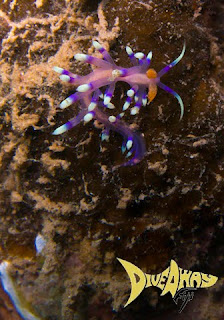
These types of relationships happen all around us underwater, but we have to stop and slow down to spot them, slow down to Fiji dive time. Spending 89 minutes underwater on a dive definitely helps. The more time we spend underwater the more likely we are to see something interesting or new. Actually this is one of the reasons Vicky and I decided to come to Fiji for diving. We had both previously worked at places that restricted divers dive times and we wanted to get back to what the scuba lifestyle is about, enjoying the underwater world for it's beauty and wonder, not just to make a buck. Too many dive company owners lose sight of why they got into the business and essentially lose site of what island time truly represents, life. They get caught up in what others are trying to escape coming to the islands for their holiday. I mean come on. Most certified divers are diving with dive computers so telling customers they can't make multilevel dives is ridiculous. By learning how to really use your dive computer or multilevel dive planner you will learn how to stay underwater longer and avoid your decompression obligations. Of course once you have all this additional bottom time only you can slow down and make sure you turn that extra time into quality bottom time to experience what's really happening underwater. Then come visit us and see what scuba diving on the Coral Coast Fiji is really about, quality.
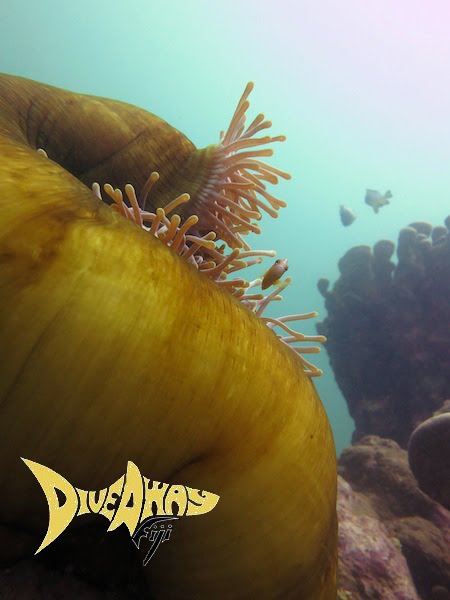


All Photos By Chris Liles
www.liquidmotionmedia.com

15 Feb 2010

Instructors notes

Wednesday 11th February

After a week down Mango Bay, all in the name of work, it is good to be back at Rydges Hideaway with Mere to keep me in line. Mango has some awesome dive sites (well the three I saw anyway!), but Stingray at Hideaway has quickly become one of my favourites as the life is so abundant and diverse. Lucky really, as I get to see a whole lot of it!

Mango Bay was a lot of fun, with Anthony completing his Scuba Diver course and, I suspect, beginning a serious addiction to bubbles, and John completing his Open Water course and off to meet the fishes in Hawaii – well done guys, you made my first dives at Mango! It was also great to find plenty of Europeans to chat to over a happy hour draught Fiji Bitter at Beachouse.

Back at Hideaway things are fairly quiet, with the boat going out most days, but not too full, less people to laugh at surprise entries. The lion fish at Stingray are still out hunting through the sea grass bed every day, and the white tips certainly know I am back, and can’t be found anywhere... The cleaner wrasse have decided that I am in good need of a clean, and can regularly be found chowing on my legs.

I had my first encounter with a seriously territorial titan triggerfish yesterday. I was showing Rachel the moray eels hanging out in the rocks, only to look up and see one pelting towards us with teeth bared. A quick swoosh with my fin just managed to deflect it, but not for long, and she was back for more. The titans have a conical shaped territory extending up from their egg sites, so you are never too sure when you are no longer trespassing. I am thinking of doing The Edge tomorrow with the DSDs, just in case... Far, far scarier than the sharks, and I understand why Alex calls them evil bastard fish!

Mere has promised to take me to Bordello soon, not a site I have done yet. She has promised me a huge and friendly Napoleon Wrasse, so I am really excited. These beautiful fish are under threat of extinction as a steak of their flesh fetches a high price in Chinese restaurants. They can live to be 100, and don’t start breeding until they are 20 years old, so it’s all about sensible fishing practices, as they are commonly caught using cyanide poisoning, fatal for all of the reef creatures within the vicinity. They live in groups, with one dominant male and a harem of females. If the male leaves the harem, and there are no other real men to take over, the top female changes sex and rules the pack – neat trick, but I think I’ll leave it to the fish!

So, fingers crossed for light rains and flat seas all in the name of good visibility! The Edge and Bordello, here we come...

23 Jul 2008

The Great Fiji Butterflyfish Count 2008

2nd to 8th November 2008

Fiji Butterfylfish Count 2008In the International Year of the Coral Reef (2008), you have the opportunity to help celebrate and record Fiji’s amazing coral reef biodiversity, show you care about our world’s delicate coral reef systems, and have fun, by taking part in a week-long hunt for the Great Fiji Butterflyfish!

Easy to do, this is suitable for visitors and locals alike, whether you are a snorkeler, SCUBA diver or Glass-bottom boat passenger. We hope that tourists, school children, scientists and all people with an interest in the marine environment will take to the reefs with us to search for Butterflyfish.

Double Saddled Butterflyfish, FijiThe Great Fiji Butterflyfish Count
will be held around Fiji from the 2nd to the 8th November 2008. You can do a single count during that week, or take place as many times as you like during that week, so that you cover different reefs. All data will be gratefully accepted!

So, grab your Great Fiji Butterflyfish Count slate from participating resorts and dive operators, put on your snorkel and mask and dive into the beautiful blue waters of Fiji, to be a part of history!

Diveaway is of course participating so drop us a line for how to get involved!

The Great Fiji Butterflyfish Count 2008

1 Apr 2008

Fiji Adventure Travel: Misty Gorillas of Kadavu - New Research

Fiji Adventure Travel: Misty Gorillas of Kadavu - New Research

Misty Gorillas of Kadavu - New Research

One fact usually overlooked by visitors to Kadavu Island are the rarely seen primates that inhabit the inaccessible jungle covered interior mountains.

The original black and white movie 'King Kong' was filmed on the island's South West shore in the shadow of Mt Delainabukelevu, the island's extinct volcano. A nearby world famous surf break is also named after the movie and surfers from around the world come to surf the left hand reef break - King Kong.

Though never seen near the coast, some villagers with plantations on the upper mountain slopes occasionally see evidence that the gorillas have raided their plantations for fruit.

A new scientific mission has been launched to try to track down and research these secretive animals. Head scientist Dr Jouve binhad and his team of researchers and biologists arrived this week on their research ship and set up their base camp anchored off Matava Resort.We will bring more news if their attempts prove successful.

12 Mar 2008

FVB Dive ME Guide

Look at the FVB Dive ME Guide here:
Here you will find an "e-brochure" about Fiji diving and it's awesome!

“Any country with coral reefs like this has a national treasure that should be protected. Fiji is on of the lucky countries.”
Roger Steene: Author, photographer and marine naturalist.

“We dropped into the blue and descended to a sandy ledge at 100ft where a hammerhead shark was sighted. Schools of barracuda and jack inhabit the channel where a large coral pinnacle is washed by 100ft plus visibility. From bottom to top there were intense pockets of filter feeders: crinoids, giant gorgonian fans, black coral, and massive soft coral trees. The diving is timed to hit enough current to engorge the soft corals and cluster the fish together. That’s what makes these reefs so vibrant and alive.”
Stephen Frink: professional underwater photographer.


24 Dec 2007

WWF South Pacific | Villagers take lead in financing their I qoloqoli in Macuata, Fiji

- By Ashwini Prabha
Fishermen from Kia Island, Fiji, with their catch. Kia has one of the 9 Marine Protected Areas (tabu) areas. © WWF Fiji.

The people of the qoliqoli (fishing grounds) of the vanua Nabekavu, Dreketi, Macuata, Sasa and Mali have, in the past 2 years, implemented set actions for the use of their I qoliqoli.

They have successfully set aside 9 areas, totaling to 117 kms2 within the I qoliqoli as tabus(protected areas), for the purpose of restocking the I qoliqoli. Already, the people of the I qoliqoli are talking about larger fishes caught near shore as in the past and different types that had not been seen in the recent years have begun to come back.

“This week we went out fishing everyday and came back with a full catch compared to few years ago when we would go out one day and have a good catch and the next three to four days we would hardly catch anything. These changes have also attracted increasing illegal fishers into the I qoliqoli and into the 'tabu' (protected areas) areas.”

- Emosi Baya, one of the I qoliqoli committee members from Nakawaga, Mali Island.

“These changes have also increasingly attracted illegal fishers into the I qoliqoli and into the tabu areas,” said Baya.

Currently WWF Fiji and partners are working with the Macuata communities by assisting in the development and implementation of resource management plan, educating and training of community members to undertake activities outlined in their management plans, training fish wardens and building community capacity (through household financial literacy training, community messaging, community biological and socio-economic surveyors etc).

With WWFs support to come to an end in three years, there is a commitment by WWF to assist the qoliqoli committee to secure funding with which the qoliqoli communities will continue to manage their I qoliqoli’s.

Long term self financing of Marine Protected Areas

A 12 month Fund Raising Plan (May 2007 to June 2008), with 4 activities, targeting FJD100,000, has been developed to generate funding for the management of the qoliqoli, spearheaded by the Qoliqoli Committee of the Vanua Nabekavu, Tikina Dreketi, Macuata, Sasa & Mali.

“A review of the 2004 management plan showed that the Qoliqoli committee lacked dedicated funds or a plan to seek funds for the implementation of this plan which includes the actions by fish wardens in stemming illegal fishing.”

- Sanivalati Navuku, Project officers, WWF Fiji Programme

The first fundraising event is the upcoming Great Sea Reefs (GSR) Sevens Rugby Tournament, in November (9th to 10th) at the Subrail Park, in Labasa. The tournament targets to raise $15,000.00.

Ten top national teams will be invited to participate, with part of their travel and accommodation costs supported by the Qoliqoli Committee through sponsorship.

A total of 56 teams are expected to participate, including boys teams of 17, 16, 15, 12, 9. The inclusion of the boys team is expected to pull in parents and families to travel to the games venue in Labasa.

Mr. Baya who is involved in the fundraiser said,

“the GSR sevens is not just to raise money but will help qoliqoli owners to come together to work towards the protection of their natural resources. Working to manage our qoliqoli has brought many of us together, from the inland villages and coastal villages for the first time. Some of us are visiting some qoliqoli villages for the first time as well.”

“When WWF started this project (MPA) in 2004, I was the only representative from the island of Mali. Today the number of representatives from Mali and other villagers has increased. These efforts are helping re-establish our traditional links.” he said.

Other fundraising activities by the Qoliqoli committee includes- Honorary Qoliqoli Owners by Invitation, targeting $9,000.00, Connecting qoliqoli members living outside of Fiji (3), targeting $10,000.00 and Village based fund raising & dinner by invitation, targeting $42,000.00.

“Effort is being made to increase the communities’ involvement and participation in the management of their resources. The communities need to take ownership in protecting their natural resources starting with MPA projects.”

- Sanivalati Navuku, Project officer, WWF Fiji.

Fiji’s precious marine ecosystem is under attack from over fishing, unsustainable and destructive harvesting of live coral and exotic fish for aquariums, and increasing levels of pollution. Climate change is also playing its part in the degradation of the marine environment as warmer sea water.

In November 2005, seven chiefs of the province of Macuata launched the first of the country’s networks of Marine Protected Areas (MPAs) on the Great Sea Reef, the third largest barrier reef in the world. This came about as a result of the Great Sea Reef survey, a first in the area, conducted in 2004 with the support of WWF and partners, which highlighted its unique biodiversity.

WWF has witnessed the benefits of MPAs to biodiversity and marine resources and the people who rely on them around the world. Hence it is supporting the Government and the people of Fiji in the development and implementation of its commitment to have 30%of the country’s EEZ under MPAs by 2020. Together with FLMMA and other key organisations, WWF is facilitating policy dialogue, scientific research, community capacity building and financing.

Source: WWF Fiji

4 Dec 2007

Book on the status of coral reefs in the Pacific launched at USP

Source: http://www.usp.ac.fj/news/story.php?id=200


IMR Director Dr Ken Mackay
at the launch of the book
The health of coral reefs in the Southwest Pacific is the subject of a new book which was launched at the University of the South Pacific this week.
Status of Coral Reefs in the SouthWest Pacific: 2004, which has been edited by Reuben Sulu, brings together reports from Fiji, Nauru, New Caledonia, Samoa, Solomon Islands, Tuvalu and Vanuatu, prepared under the auspices of the Global Coral Reef Monitoring Network (GCRMN). It was published by the Institute of Pacific Studies Publications at USP in collaboration with the University's Institute of Marine Resources. 

The book was launched by IMR director Dr Ken MacKay who pointed out that book carried important information on coral reefs in this part of the world.
"The book is based on a 2004 coral reef monitoring report results of which were condensed into a global report which came out two years ago, said Dr MacKay.
He pointed out that coral reefs played an essential role in maintaining strong and healthy ecosystems, and which also contribute to local communities by way of providing food supplies, protecting coastlines and generating tourism opportunities. 

The book reports on the status of coral reefs of the region and discusses threats to the reefs, before offering suggestions and recommendations for their ongoing management. The major issues in the region were commercial exploitation of marine resources, cyclone damage and coral bleaching. In face of these threats, survey results revealed that overall coral cover has increased since the major bleaching events (2000, 2002) to almost pre-bleaching levels and recognition of commercial exploitation and other anthropogenic impacts has led to awareness programs and establishment of small Marine Protected Areas (MPAs) throughout each island country. A similar report is currently being prepared and results of the 2007 surveys will be published in 2008. 

Status of Coral Reefs in the Southwest Pacific: 2004, was financially supported by the Canada-South Pacific Ocean Development Programme, with further editing funded by the Coral Reef Initiatives for the Pacific (CRISP). It is available at IPS Publications, the Institute of Marine Resources and the USP Book Centre (all at the University of the South Pacific's Laucala Campus) or online at www.ipsbooks.ac.fj (ISBN: 9789820203860, 274pp, illus. col. RRP $34).

19 Nov 2007

SeaLife Cameras upgrade and get even better


These are the cameras for rent at Diveaway Fiji!

Stuart
============================================

SeaLife introduces new Digital PRO Flash and repositions Reefmaster Mini

Digital PRO Flash

At DEMA 2007, Sealife introduced the Digital PRO Flash – SL961, which replaces the Digital Flash – SL960D.

The Digital PRO Flash is compatible with any Sealife camera as well as all other brands of digital underwater cameras. It also features a new AUTO mode setting, which automatically adjusts the flash brightness for the optimal image exposure. A variable power adjustment setting allows the user to manually fine-tune the brightness for the desired effect.

“The best underwater photographs capture a whole other world,” said Joe Ifi, Sealife Cameras director of sales and marketing. “This flash enables the photographer many different options in both settings and uses thus making that other world so much more accessible.”

Depth tested up to 200 feet (60m), this flash has an effective underwater distance range up to about 8 feet (2.5m), which makes it one of the most powerful flashes available in the market. Its flexible, rubberized arm allows for a sure grip and easy aiming. The flash is operated by 4 AA batteries for approximately 100 flashes.

The Sealife Digital PRO Flash includes a universal mount, an optical cable connection which attaches to any camera as well as a deluxe carrying case. The Digital PRO Flash has a suggested list price of $399.95 and MAP of $349.95.

New Pricing

As of November 1, 2007 Sealife has repositioned its ReefMaster Mini and Ecoshot cameras, just in time for the Holidays. The ReefMaster mini will now have a Sugg. Retail of $279.95 while the Ecoshot will be at $229.95 Sugg. Retail. Both cameras are in stock and available for immediate shipment.

For more details, visit the Sealife Cameras website at www.sealife-cameras.com

Material posted and distributed through DiveNewswire

12 Nov 2007

Fiji’s reefs in spectacular condition!

Fiji’s reefs in spectacular condition!


Fiji’s reefs show high coral health after recovering from a coral bleaching event.

Coral reefs have frequently been in the news over the past few years, usually for all the wrong reasons, in articles about dying corals across the globe. However, Fiji has had reason to celebrate, with recent scientific reports suggesting that the reefs here are remarkably resilient, and currently in the best condition recorded. (this millennium!)

Fiji is a large archipelago with a great variety of reef types, spread across the country. While not denying that reefs have their ups and downs, the Fiji branches of the Global Coral Reef Network (GCRMN) and Reef Check have just published the results of eight years of study, where reefs have been seen to recover from events such as Cyclones, Crown of Thorns Starfish and High-temperature Coral Bleaching, within five years.

Dive operators around the Fiji Islands have supported and carried out scientific reef surveys on their dive sites, which have shown reefs affected by coral bleaching in 2000 were back to normal amounts of coral cover by 2005, and even better than normal by 2007.

Many reefs are currently showing a spectacular array of hard corals, with more than 80% coral cover, and 40% Acropora branching and table corals, the most attractive to fish, marine animals, and divers. This suggests that corals in Fiji can survive quite catastrophic events as long as they do not occur too often, a nice cause for optimism for the South Pacific reefs.

Detailed reef health reports can be found at:

By: Helen R Sykes

Director Marine Ecology Fiji

Fiji Co-coordinator Reef Check

Fiji Co-coordinator GCRMN

1 Oct 2007

Nurses Notes

Bula (Hello), and welcome to the autumn edition of Nurses Notes.

From the greeting in the opening line, you may or may not have guessed that I am in Fiji mode and will endeavour to stay that way as long as I possibly can. I have just returned home after a marvellous (and much needed) 10 day holiday at the fabulous Hideaway Resort on the coral coast of Fiji.

While at Hideaway, I refreshed my scuba diving skills with Diveaway Fiji, and went on to complete my Advanced Open Water Scuba Diver course. My passion for scuba diving was well and truly re-ignited and I plan on returning to Hideaway next year and completing my Rescue Diver course with them. The diving team at the resort were spectacular and are very passionate about showing you the magnificent treasures that await you in the underwater world. I know it sounds odd but some of the diving spots are just like they are from the movie ‘Finding Nemo’.

One site known as ‘Casbah’ was particularly like it. The diving was just wonderful and the water so lovely and warm. The lowest temperature was 29 degrees at a depth of 30 metres (diving here in Port Phillip Bay, although good, is never warm, and you are lucky to get a water temperature above 20 degrees during summer). It was lovely to come back from my dives each day and share my wonderful adventures with my family and friends who were excited to listen to my tales.

A picture from Alan Walton's dive!


The staff at Hideaway are just so beautiful and warm that they quickly become like family and you never want to leave. To give you a small glimpse of paradise, I have uploaded a link to some photos I took of the trip and the websites for Hideaway Resort and Diveaway.

11 Jul 2007

Moon Handbooks Fiji

If you want to travel to any of the 322 islands in the Fiji archipelago, Moon Handbooks Fiji has everything you need.

From coverage of Fiji's top-rated resorts to the newest adventure tourism facilities and little-known backpacker areas, travelers of all interests will find the destination to suit them.


This guidebook includes vivid descriptions of the islands' dazzling beaches, rainforests, and reefs, with a special focus on scuba diving, snorkeling, surfing, windsurfing, rafting, kayaking, hiking, bicycling, and golf.

Complete with practical essentials, including photographs, illustrations, and 53 easy-to-use maps and transportation tips for island hopping by sea or air, Moon Handbooks Fiji is the guide for a uniquely personal travel experience.

8 Jun 2007

Thank you!

Bula, Alex & Alice!

I just wanted to send you a quick "hello" from Chicago. We had a great time in Fiji, and really enjoyed our stay at the Hideaway.

One of the absolute, unexpected highlights of our vacation was scuba diving with Diveaway Fiji. As you know, we (myself, Ashley and Kyra) had never before been scuba diving in our lives, and we never even imagined that we would be able to scuba dive while we were in Fiji in March 2007.

Thanks to your positive encouragement and comprehensive instructions, we found ourselves about 30 feet deep in the Pacific Ocean before we knew it. The entire experience was truly amazing. I'll always remember the absolute calm and beauty of being immersed in the fascinating under water world for the very first time!

We can't wait to get back into the water. I'm sure we will plan many of our future vacations with scuba diving opportunities in mind. You have definitely infected the three of us with scuba-fever.

Best of luck to you, and we wish you continued success with your diving business and experiences.

Thanks,

Larry, Judy, Ashley & Kyra

31 May 2007

Diving in your later years……


Today I had a great experience! I took Helen and her daughter on a PADI Discover Scuba Dive! Helen is a 72 year old lady who suffers from post viral fatigue syndrome. We had to make a few adjustments of our dive plan, rather than doing a backwards roll entry into the water we made a slow shore start, and then during the dive we would swim a few meters then stop kneel down and look at the fish and coral.

It was so refreshing to take our time, we were able to look at the different colours and textures of the corals, fish who dwell in different areas, a turtle who was resting in a hole came out and gently cruised around us. After a study of a sleeping puffer fish, and a small cray in a hole we came across 2 resting white tip sharks, Helen was anxious to move on but we sat quietly then moved forward (to her dismay) until we were kneeling a meter away from them! Helen couldn’t believe she was sitting with the sharks!

Moving on we passed 2 more sharks, a large school of snappers, forty minutes had passed and Helen signalled she was tyred, so we slowly moved our way up on top of the reef before surfacing. On surfacing I checked her air gauge she still had 110 bar left not bad for a beginner!!

Helen's scuba dive was the highlight of her holiday and an eye opener to me, a dive I have done 100’s times, this is one I will defiantly remember.

26 May 2007

Ten Delicious Ways to Dip into Diving

On Away.com By Paul McMenamin


"The conditions that make for great diving—warm, translucent water, good weather, and tropical locales—also make for a terrific getaway vacation. You'll find great bargains at the big Carribean resorts, while exotic destinations such as Borneo and Micronesia promise true underwater adventure.

Fiji: South Pacific Paradise
Ask divers who have sampled most of the world's leading dive spots where they would go for a perfect dive vacation, and more often than not, Fiji is the answer. Topside, Fiji is Polynesia at its best—unspoiled and uncrowded. The water is warm and clear, and there is every imaginable shape and variety of coral in all colors of the rainbow. The variety of dive sites is staggering—from the air, Fiji appears as a vast patchwork of coral, covering hundreds of square miles.

Fiji is one destination where there is no clear choice between live-aboard and land-based options. Both offer advantages and disadvantages. On a live-aboard you will be able to explore the more remote dive sites, and log the most dives per day. On the other hand, you will miss the experience of living on a tropical island, which is one of the best reasons to visit Fiji in the first place. The outer islands are quiet, idyllic retreats where civilization truly slips from your consciousness. The Fijians are a wonderful people, fun-loving and warm-hearted."

Read the whole article on Away.com...

24 Apr 2007

Winter Jetaway to Fiji with Rainbow High Vacations

These guys dived with us last year and here's their review....


"For diving afficionados, Diveaway Fiji, the Resort’s on-site PADI dive center, offers a range of diving to suit everyone from experienced divers to complete beginners. All the dive sites are very close (the furthest a mere 10 minutes boat ride away), so you can choose to do one or two dives and be back for lunch. The great tropical diving includes walls, passages, swimthroughs, soft and hard corals, fans and caves.

Marine life is abundant and varied – Fiji has one of the largest ranges of tropical fish anywhere in the world, and sightings of turtles, rays and reef sharks are regular occurrences. For beginners, there is a free scuba lesson in the pool daily, where you are given enough training and skills to be able to go on a sea dive under the direct supervision of a PADI dive instructor. This 'Discover Scuba Dive' also counts towards your certification course."

See the full article at Rainbow High Vacations website

15 Apr 2007

Fiji Diving Video on Youtube.com

Love island raindance

Weather still deeply ropey. Probably won't change till this TV crew leave - they brought it with them, just to show millions of people in the UK(well, ok, tens of people) that the weather in Fiji can be grotty whilst back in England they are experiencing a tropical heatwave. Buggers.

20 Jan 2007

Marine Life of Fiji and Tonga DVD

Created for divers, snorkelers, aquarists and all marine enthusiasts, this "V.I.D." (Video ID) Guide covers the incredible marine biodiversity of this fantastic corner of the South Pacific. It's an comprehensive identification guide to 1272 animal and plant species -- except that instead of being a book full of pictures, it's a video with gorgeous real-life footage of each species, and each of the 1739 video clips is labeled with the common and scientific names of each species.

Beautifully filmed and visually engaging, "Marine Life of Fiji and Tonga" contains pretty much everything you are likely to see, catch or hear about when getting wet in this part of the world.

The box contains 2 DVD videos that you can play on your TV or computer PLUS a 16-page reference booklet with line drawings, descriptions and helpful information. Features: 3.5 hours of gorgeous underwater footage; 77 intuitive and easy-to-navigate DVD chapters; Juveniles, males, females -- plus endemic species and local colour variations; Video allows you to study behaviour: how species swim, feed, court, fight, clean, hunt; Tight macro shots show fine details, markings and texture normally impossible to see; Soothing ambient music by award-winning composer Bjorn Lynne; Filmed with utmost care and respect for the underwater environment.

Three years and more than 3000 dives in the making, this product is both an essential tool and exotic entertainment.